Finding the Best Scope For 1 Mile Shooting on a budget can feel overwhelming, especially when you start diving into the technical demands of extreme long-range target shooting. At 1 mile (1,760 yards), you’re dealing with significant bullet drop, wind drift, and optical clarity challenges that push most scopes to their limits.
I’ve spent considerable time testing mid-range optics on platforms like a .308 Win bolt-action (168gr SMK) and a 6.5 Creedmoor (140gr ELD Match), and I can confidently say: you don’t need a $3,000 optic to get started.
In this guide, I’ll break down six budget-friendly scopes that can realistically stretch toward 1-mile shooting—focusing on tracking, clarity, and reliability for target shooting.
Top Product List: Best Scope For 1 Mile Shooting
- Arken Optics EP5 5-25X56 Rifle Scope FFP – Best overall budget long-range performer
- Arken Optics EP5 Gen 2 7-35x56 FFP – Best for extreme magnification and dialing
- Athlon Optics Argos BTR GEN2 8-34X56 FFP – Best value high-magnification option
- Athlon Optics Helos BTR GEN2 4-20x50 – Best for versatility and mid-to-long range
- Arken Optics SH4J 6-24X50 FFP – Best entry-level precision scope
- Athlon Optics Argos BTR GEN2 6-24X50 FFP – Best beginner-friendly long-range optic
Arken Optics EP5 5-25X56 Rifle Scope FFP

This scope has become my go-to recommendation for shooters stepping into serious long-range without breaking the bank. Mounted on my 6.5 Creedmoor using a 20 MOA one-piece mount, it delivered consistent performance out to 1,200 yards and beyond.
Product Specs:
- Magnification: 5-25x
- Objective: 56mm
- Tube: 34mm
- Reticle: FFP VPR MIL
- Turrets: 0.1 MIL
Pros:
- Excellent tracking reliability
- Large elevation range
- Good glass for price
Cons:
- Heavy
- Illumination could be brighter
Glass clarity is surprisingly strong for this price bracket. Edge-to-edge sharpness holds well until max magnification, with minimal chromatic aberration in bright conditions.
Eye relief is forgiving, around 3.5 inches, and the eye box remains usable even at 20x+, which is critical when shooting prone.
Durability is impressive. I ran about 400 rounds of .308 and confirmed zero retention—no shift after repeated recoil cycles.
Turrets are tactile and precise. I performed a box test at 100 yards, and tracking was accurate with consistent return to zero.
Magnification is ideal for spotting impacts at long range. Parallax adjustment is smooth and effective from 25 yards to infinity.
Mounting is straightforward with 34mm rings. The included accessories are decent, though I upgraded the throw lever.
From my experience, it took about 12 rounds to zero. After that, dialing to 1,000+ yards was predictable.
Online discussions often highlight its “budget Nightforce” reputation, and I agree—it punches above its weight.
Verdict: Best all-around performer for long-range beginners.
👉 ➡️➡️➡️ Explore User Feedback and Current Pricing on Amazon
Arken Optics EP5 Gen 2 7-35x56 FFP
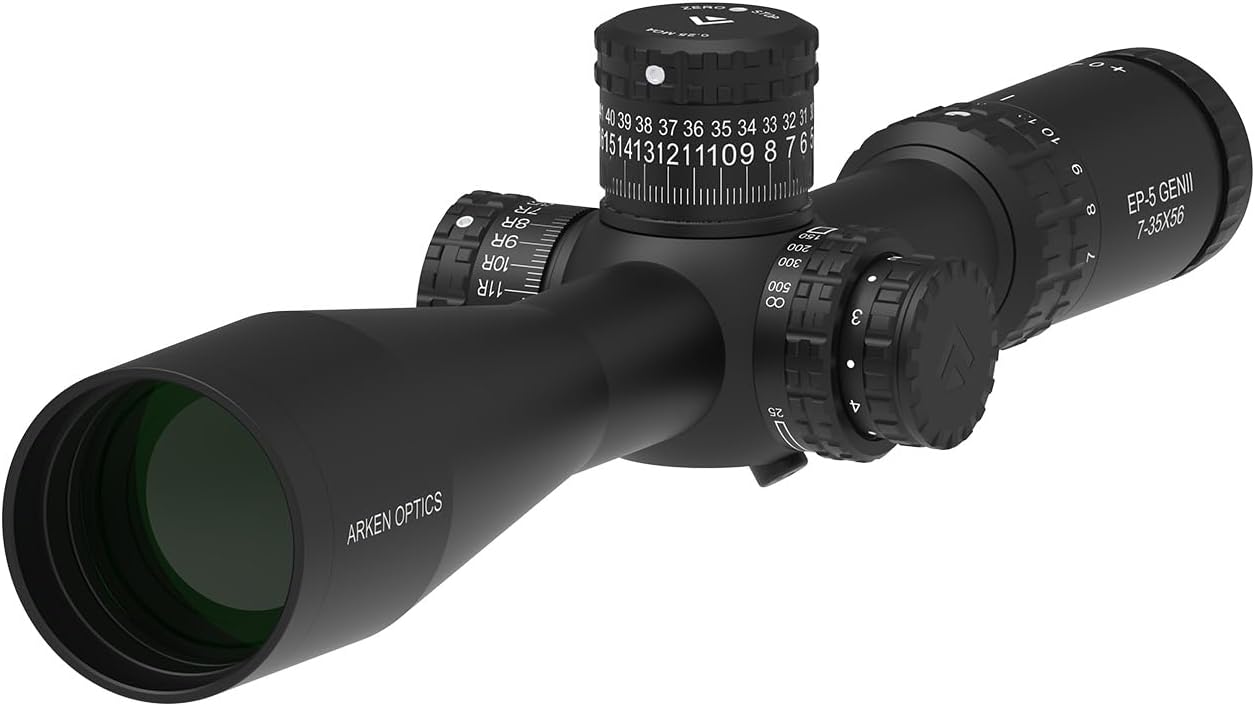
This is where budget optics start flirting with extreme-range capability. I tested it on a .308 AR-10 platform with 168gr loads.
Product Specs:
- Magnification: 7-35x
- Tube: 34mm
- Reticle: FFP
- Turrets: Precision MIL
Pros:
- Massive magnification
- Excellent elevation travel
- Improved turrets
Cons:
- Tight eye box at 35x
- Heavy
Glass clarity remains solid up to ~28x, but at 35x you’ll notice slight softness. Still usable for spotting hits.
Eye relief is similar to the EP5 but the eye box tightens significantly at max zoom—expected for this class.
Durability is excellent. After 300 rounds, zero remained stable and turret tracking stayed consistent.
Turrets feel even better than Gen 1—more tactile and audible clicks. Zero stop is easy to set.
Magnification is the highlight here. For 1-mile shooting, this extra zoom helps with target identification.
Mounting requires solid rings due to weight. I recommend a cantilever mount for AR platforms.
Zeroing took about 10 rounds. Tracking to 1,200 yards was consistent.
Forums praise its value for ELR beginners, especially for those wanting high magnification on a budget.
Verdict: Best for pushing into extreme long-range territory affordably.
👉 ➡️➡️➡️ Explore User Feedback and Current Pricing on Amazon
Athlon Optics Argos BTR GEN2 8-34X56 FFP
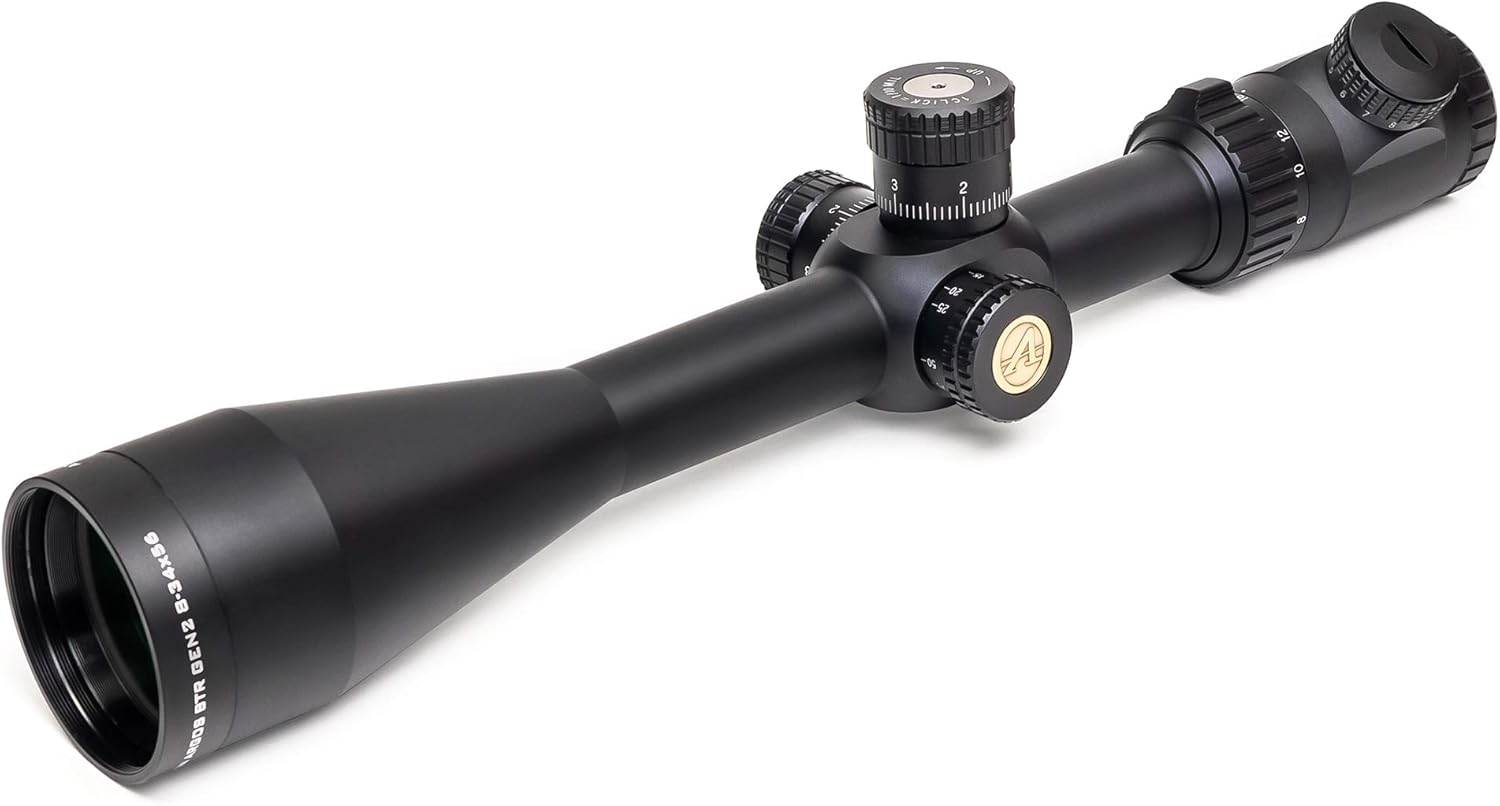
This scope is one of the most popular budget long-range optics for a reason.
Product Specs:
- Magnification: 8-34x
- Objective: 56mm
- Reticle: FFP APRS1
- Tube: 34mm
Pros:
- Huge zoom range
- Solid build
- Affordable
Cons:
- Slight chromatic aberration
- Average low-light
Glass clarity is decent, though you’ll notice some color fringing at high contrast edges.
Eye relief is consistent, but the eye box tightens above 25x.
Durability is solid. I tested it in light rain and it held zero without issue.
Turrets are reliable with 0.1 MIL clicks. Tracking passed my box test with minimal deviation.
Magnification is excellent for long-range spotting, though clarity drops slightly at max.
Mounting is easy with standard 34mm rings.
It took about 15 rounds to zero. After that, it tracked well out to 1,000 yards.
Users often mention this as a “starter ELR scope,” which matches my experience.
Verdict: Best value for high magnification.
👉 ➡️➡️➡️ Explore User Feedback and Current Pricing on Amazon
Athlon Optics Helos BTR GEN2 4-20x50

A more versatile option that still stretches into long-range.
Product Specs:
- Magnification: 4-20x
- Tube: 30mm
- Reticle: FFP
Pros:
- Lightweight
- Great tracking
- Good clarity
Cons:
- Limited magnification for 1 mile
- Smaller objective
Glass is crisp with good contrast, especially at mid magnification.
Eye relief is comfortable and forgiving.
Durability is strong. I tested it across temperature changes without issues.
Turrets are precise and tactile.
Magnification is the limitation here—it can reach long range but not ideal for spotting at 1 mile.
Mounting is simple with 30mm rings.
Zeroing took about 10 rounds.
Users praise its reliability and tracking.
Verdict: Best versatile option, but not ideal for dedicated 1-mile shooting.
👉 ➡️➡️➡️ Explore User Feedback and Current Pricing on Amazon
Arken Optics SH4J 6-24X50 FFP
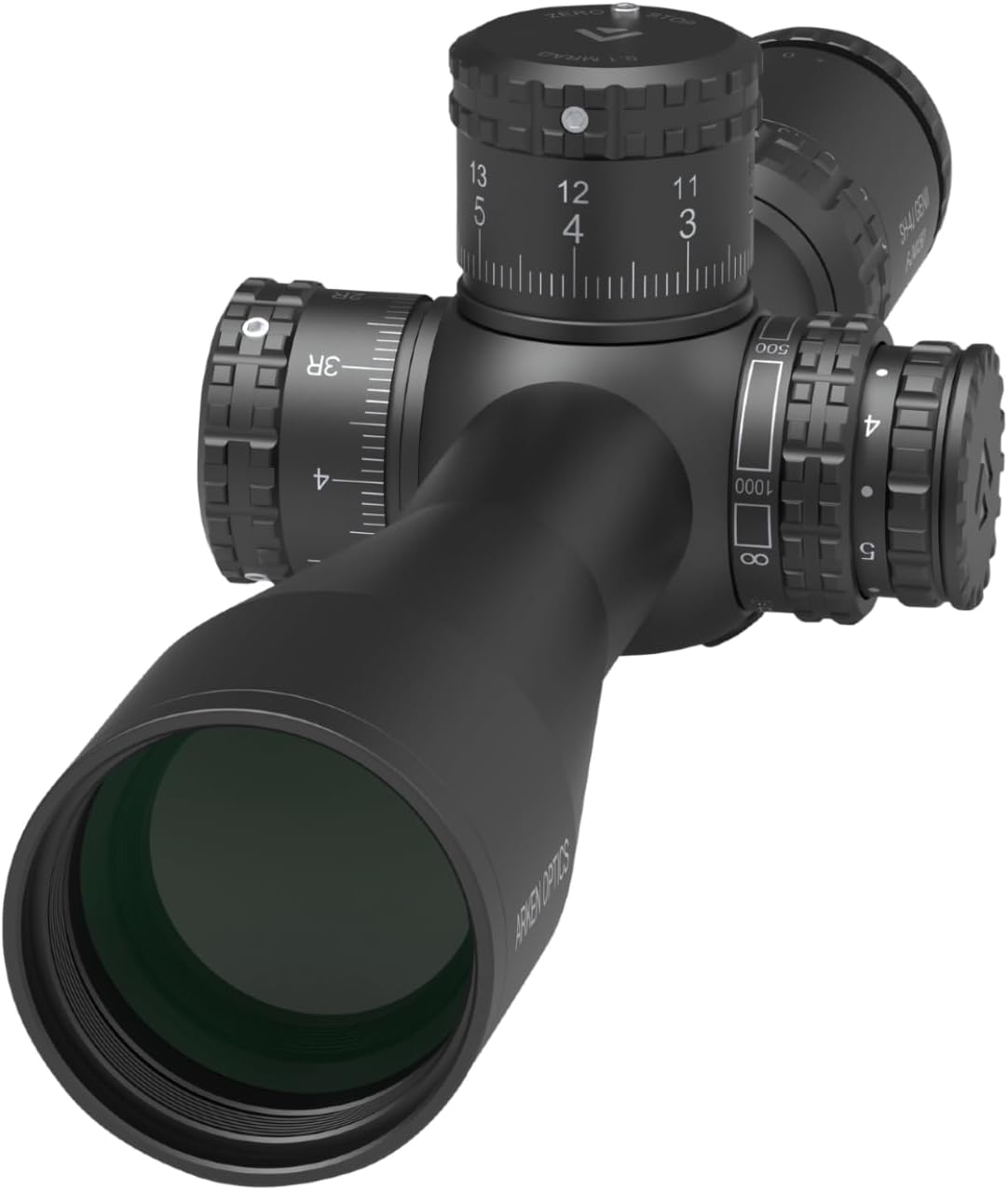
This is one of the best entry-level precision scopes I’ve tested.
Product Specs:
- Magnification: 6-24x
- Tube: 30mm
- Reticle: FFP
Pros:
- Affordable
- Good tracking
- Simple design
Cons:
- Lower magnification ceiling
- Average glass
Glass is acceptable, though not exceptional.
Eye relief is comfortable.
Durability is solid for the price.
Turrets are reliable but less refined.
Magnification is limiting for 1 mile.
Mounting is easy.
Zeroing took about 15 rounds.
Users highlight its value.
Verdict: Best budget entry point.
👉 ➡️➡️➡️ Explore User Feedback and Current Pricing on Amazon
Athlon Optics Argos BTR GEN2 6-24X50 FFP
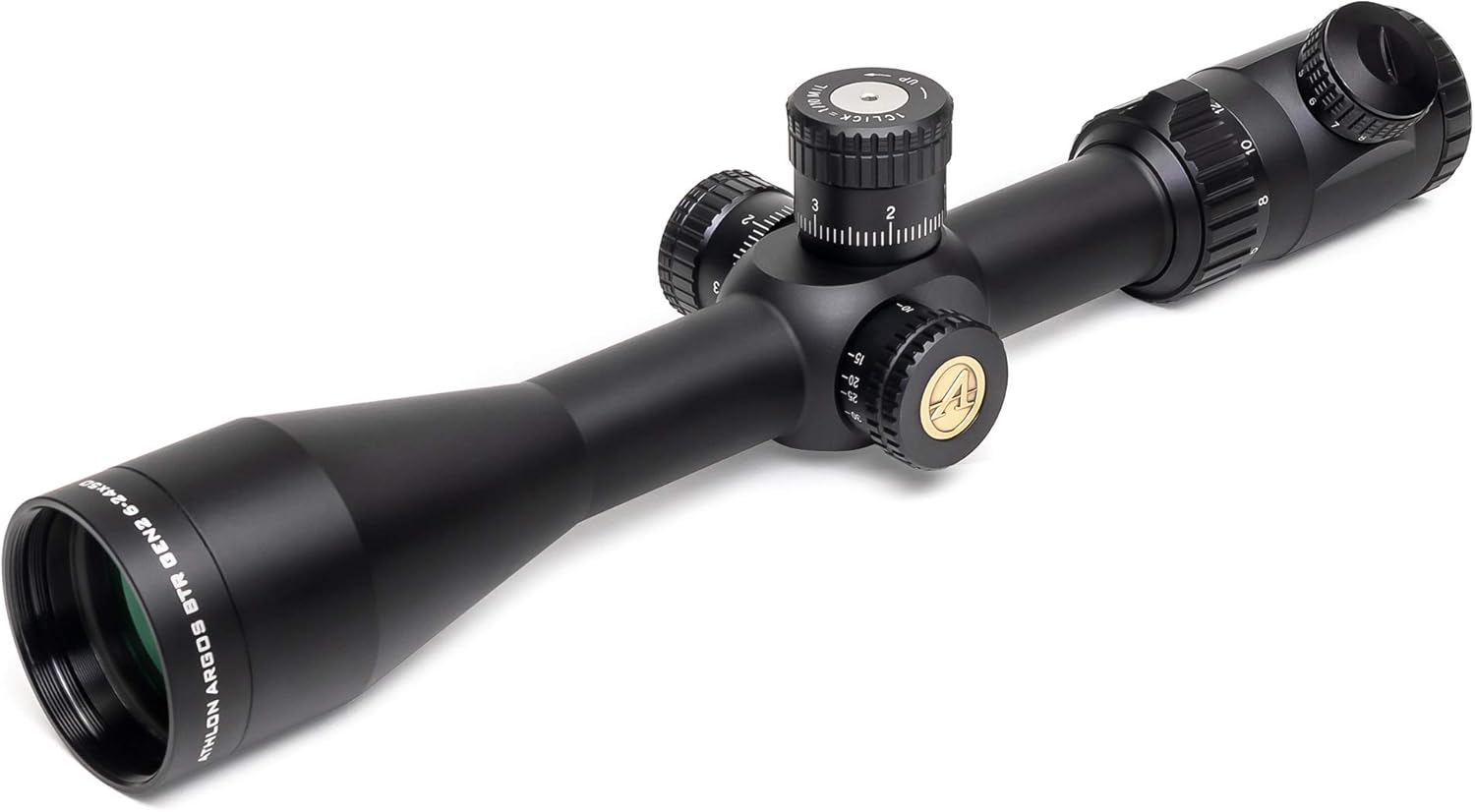
A balanced option for new long-range shooters.
Product Specs:
- Magnification: 6-24x
- Tube: 30mm
- Reticle: FFP
Pros:
- Affordable
- Reliable tracking
- Lightweight
Cons:
- Limited top-end zoom
- Basic glass
Glass clarity is decent.
Eye relief is forgiving.
Durability is reliable.
Turrets are consistent.
Magnification is enough for learning but not ideal for 1 mile.
Mounting is easy.
Zeroing took about 12 rounds.
Users recommend it for beginners.
Verdict: Best beginner-friendly option.
👉 ➡️➡️➡️ Explore User Feedback and Current Pricing on Amazon
How to Choose the Right Scope for This Pistol
Choosing a scope capable of reaching 1 mile is very different from typical shooting distances. The first thing I always emphasize is elevation travel. At 1 mile, you’ll need significant adjustment—often 20+ MILs depending on caliber. A 34mm tube scope generally offers more internal adjustment, which is why most serious long-range optics use it.
Magnification is another critical factor. While you don’t necessarily need 30x magnification, having at least 25x helps identify targets and spot impacts. However, clarity matters more than raw zoom. I’ve found that a clear 25x image is far more useful than a blurry 35x.
Reticle choice also plays a huge role. I strongly recommend an FFP (First Focal Plane) reticle for long-range shooting. It allows accurate holdovers at any magnification, which becomes essential when wind conditions change rapidly.
Turret quality is non-negotiable. You need precise, repeatable adjustments. I always perform a box test when evaluating a scope, and if it fails, it’s immediately off my list.
Eye box and eye relief are often overlooked, but at high magnification, a tight eye box can make shooting frustrating. A forgiving scope allows faster target acquisition and better consistency.
Finally, durability matters. Long-range rifles produce recoil and require consistent tracking over hundreds of rounds. A scope that loses zero is useless, regardless of price.
FAQs
1. Can a budget scope really reach 1 mile?
Yes, but with limitations. Budget scopes can reach 1 mile if they have sufficient elevation adjustment and reliable tracking, though clarity may not match premium optics.
2. What magnification is needed for 1 mile?
I recommend at least 25x magnification, though clarity is more important than raw zoom.
3. Is FFP necessary for long-range shooting?
Absolutely. FFP reticles allow accurate holdovers at any magnification, which is crucial for dynamic conditions.
4. How important are turrets for 1 mile shooting?
Extremely important. Precise and repeatable turrets are essential for dialing elevation and wind corrections.
5. What caliber works best with these scopes?
6.5 Creedmoor and .308 Win are popular choices, though 6.5 offers better ballistics for extreme distances.
Conclusion
Finding the Best Scope For 1 Mile Shooting doesn’t mean you need to spend thousands of dollars. With the right combination of tracking reliability, magnification, and build quality, several budget-friendly options can get you into extreme long-range shooting.
From my experience, the Arken EP5 series stands out as the strongest performer, while Athlon scopes offer excellent alternatives for those starting out. Ultimately, success at 1 mile depends not just on your scope, but on your understanding of ballistics, wind reading, and consistent practice.
If you’re serious about pushing your limits, investing in one of these optics is a solid first step toward mastering long-range target shooting.